The industrial sector is experiencing a massive structural transformation. For decades, the primary objective of manufacturing automation was straightforward: replace human labor with mechanical repetition to achieve high-volume uniformity. However, the traditional approach of prioritizing raw speed and static cost reduction has reached its natural limits. Today, global volatile markets, complex supply chains, and evolving environmental mandates require a complete overhaul of factory floor dynamics.
Modern industrial innovation is defined by the shift from rigid, automated systems to autonomous, adaptive ecosystems. This transition represents the convergence of advanced digital technologies with human-centric operational philosophies, fundamentally changing how products are designed, built, and distributed. This analysis explores the core pillars driving the next generation of smart manufacturing and industrial resilience.
Hyper-Automation and the Rise of Adaptive Smart Factories
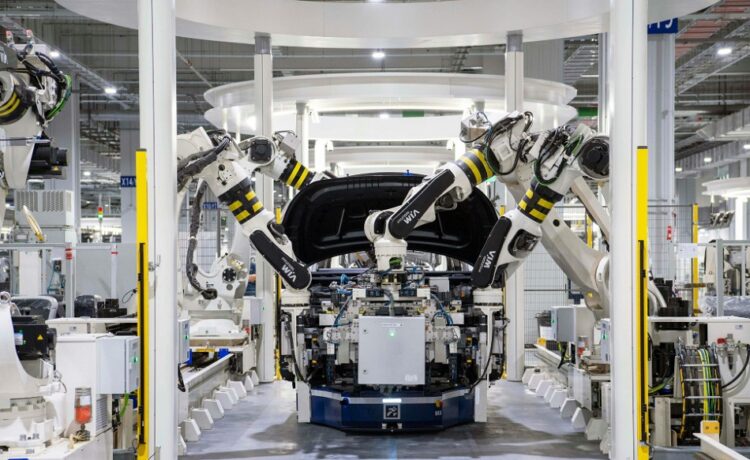
The foundation of modern industrial facilities is moving past isolated automation into a state of hyper-automation. Traditional automated assembly lines operate on rigid scripts; if a single variable changes out of tolerance, the system halts. Hyper-automation combines artificial intelligence, machine learning, and advanced sensors to build factories that can independently sense, learn, and optimize operations in real time.
This cognitive layer allows machinery to adapt to unexpected production shifts without requiring immediate human intervention.
-
Predictive to Adaptive Controls: Instead of merely alerting a team member when an anomaly occurs, intelligent manufacturing networks can adjust equipment settings automatically. For instance, if an onboard sensor detects a micro-deviation in cutting pressure due to tool wear, the system recalculates and modifies the feed rate on the fly to prevent defects.
-
Closed-Loop Quality Control: Automated vision systems equipped with deep-learning algorithms inspect items instantly at various stages of production. When a recurring defect pattern is identified, the tracking system traces the issue back to the precise mechanical source and updates the upstream equipment parameters to fix the problem instantly, eliminating widespread waste.
-
Reconfigurable Production Lines: Market demands change faster than ever. Modern smart factories utilize modular production blocks and standardized, interchangeable machinery layouts. This flexibility allows manufacturers to rapidly switch assembly lines between completely different product variants with minimal downtime and zero physical re-engineering.
Digital Twins and Advanced Multi-Physics Simulation
One of the most valuable tools in modern product development and operational management is digital twin technology. A digital twin is a highly detailed virtual replica of a physical part, machine, or entire factory ecosystem. Rather than treating design and production as separate stages, digital twins link the virtual and physical worlds through a continuous stream of real-time sensor data.
Accelerating Product Development
Engineers are increasingly adopting a discipline known as design for manufacturability. By running a new product concept through an advanced multi-physics simulator, design teams can test thousands of virtual stress scenarios, material choices, and assembly methods before manufacturing a single physical prototype. This virtual testing reduces initial research and development timelines by as much as twenty to fifty percent while dropping material costs significantly.
Optimizing Plant Management
At the operational level, a factory-wide digital twin acts as a centralized dashboard for facility management. Maintenance teams can simulate potential adjustments to production schedules or layout modifications in the digital space to evaluate the impact on energy consumption and workflow efficiency. This comprehensive view removes the financial risk of physical trial-and-error adjustments.
Advanced Robotics and Collaborative Human-Machine Ecosystems
The relationship between industrial workers and factory machinery is undergoing a deliberate realignment. While the previous phase of industrial development focused heavily on reducing human presence on the shop floor, modern strategies emphasize collaboration, a movement frequently characterized as Industry 5.0.
The Evolution of Collaborative Robots
Traditional industrial robots are massive, fast-moving machines that must be cordoned off in safety cages to protect workers. Collaborative robots, or cobots, are built with built-in force-feedback sensors, proximity radars, and soft materials that allow them to operate safely alongside human technicians. Cobots handle the repetitive, physically taxing, or hazardous tasks, such as precision lifting and repetitive welding, while human operators focus on high-level quality oversight and problem-solving.
Augmented Intelligence for the Workforce
Industrial innovation is changing the skillset required for manufacturing careers. Modern plant operators spend less time handling raw materials and more time working with software dashboards and data streams. Emerging facilities deploy interactive copilot systems that deliver contextual instructions, parts breakdowns, and diagnostic suggestions directly to technicians on the shop floor, accelerating training times and decreasing human error during complex maintenance tasks.
Living Supply Chains and Real-Time Logistics Networks
Recent macroeconomic challenges have highlighted the vulnerability of traditional, linear supply chains. Relying on static spreadsheets and historical forecasts makes an organization highly vulnerable to geopolitical conflicts, extreme weather events, and transport capacity shortages. Forward-thinking manufacturers are building dynamic, living supply chain networks that treat disruption as a constant factor.
-
End-to-End Visibility Platforms: Modern logistics networks integrate supplier data, freight tracking, and warehouse inventories into a single source of truth. This connectivity allows manufacturers to see potential delays at distant ports or raw material shortages weeks before they impact the main assembly line.
-
Agentic AI Sourcing: When a supply disruption occurs, intelligent systems do not wait for human operators to manual source alternatives. The software can automatically scan global databases, run automated compliance checks, verify international pricing metrics, and draft alternative purchase orders to keep production steady.
-
Reshoring and Regionalization: To lower the structural risks of long transit times, enterprises are shifting toward localized and regional manufacturing strategies. Building smaller, agile production hubs closer to primary consumer markets allows companies to respond faster to shifting regional demands while reducing overall transportation carbon footprints.
Sustainable Industrial Systems and Circular Manufacturing
Environmental responsibility is no longer a separate compliance burden; it is now a core metric of operational efficiency. Industrial innovation heavily targets waste reduction, energy optimization, and the creation of circular economies where end-of-life products are integrated back into production pipelines.
Energy Optimization via IoT
Smart factories utilize dense networks of Internet of Things sensors to monitor electricity, water, and gas consumption down to individual machine units. Machine learning models analyze this data to identify energy leaks, run heavy operations during off-peak utility hours, and automatically put idle equipment into deep energy-saving states.
Circular Value Recovery
True industrial sustainability requires moving away from the take-make-waste philosophy. Advanced manufacturers design products specifically for deconstruction and material recovery. Automated sorting lines use machine learning and specialized sensors to separate post-consumer materials, allowing factories to re-integrate recycled feedstocks back into early production phases without sacrificing structural integrity.
Frequently Asked Questions
What is the core difference between Industry 4.0 and Industry 5.0?
Industry 4.0 focuses heavily on connectivity, internet-connected machinery, big data analytics, and the complete automation of factory systems to maximize speed and efficiency. Industry 5.0 expands on this digital foundation by explicitly reintroducing human ingenuity, focusing on close collaboration between humans and collaborative robots, prioritizing worker well-being, and placing a massive structural emphasis on environmental sustainability and circular economic practices.
How does generative artificial intelligence impact the product design stage in manufacturing?
Generative artificial intelligence allows engineers to input specific performance targets, material weight limits, and cost constraints into design software. The system then evaluates thousands of geometric options to generate optimal structural designs that human designers might not easily conceive. This process often produces highly efficient organic shapes that can only be executed through additive manufacturing techniques.
Does the transition to autonomous smart factories result in widespread industrial job losses?
The transition changes the nature of manufacturing employment rather than eliminating it entirely. While manual, repetitive assembly roles are decreasing, there is a substantial spike in demand for tech-literate professionals, including data analysts, systems optimization engineers, robotics maintenance technicians, and digital twin managers. The focus shifts from physical labor to technical problem-solving.
What is predictive maintenance and how does it save capital for manufacturers?
Predictive maintenance utilizes vibration sensors, temperature monitors, and acoustic tools to track the health of machinery during active operations. Instead of shutting down an assembly line for fixed calendar-based maintenance or waiting for a catastrophic mechanical failure to occur, AI models analyze real-time data to predict exactly when a specific part will fail, allowing teams to schedule targeted repairs during planned operational lulls.
How do reconfigurable production lines handle compliance and quality validation?
Reconfigurable lines utilize digital product passports and automated testing modules embedded directly within each production block. When an assembly line shifts to a new product configuration, the integrated testing software updates its validation criteria instantly, using high-resolution cameras and sensors to verify compliance with industry standards on the first unit produced.
What are the main security risks associated with highly connected industrial environments?
As factories connect their physical equipment to cloud networks, they face increased vulnerability to cyberattacks, intellectual property theft, and industrial espionage. To combat these threats, modern manufacturers implement zero-trust network architectures, segment operational technology away from corporate office networks, utilize automated anomaly detection tools to spot unusual network traffic, and conduct regular workforce cybersecurity training.
How does additive manufacturing support supply chain resilience?
Additive manufacturing, commonly known as industrial 3D printing, allows companies to produce specialized replacement parts, custom tools, and final components on-demand directly at the facility where they are needed. This capability removes the requirement to maintain massive physical inventories of slow-moving spare parts and eliminates the dependence on long-distance shipping networks during a critical machine breakdown.