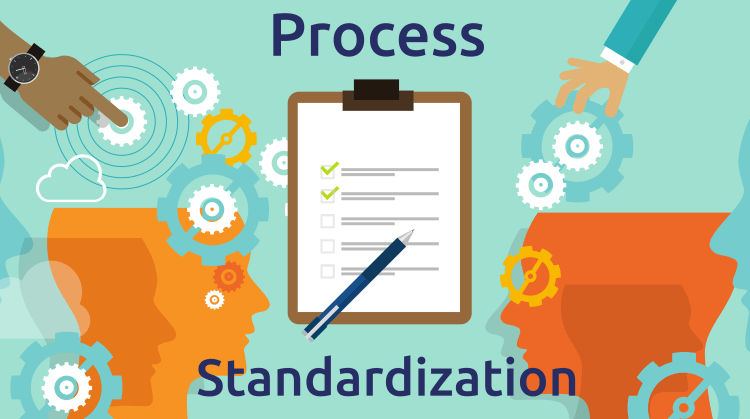
Large-scale industries operate within complex environments where thousands of activities happen simultaneously across departments, locations, and teams. Without clear and consistent processes, even small inefficiencies can multiply into major operational issues. Process standardization provides a structured way to ensure that work is performed uniformly, predictably, and efficiently, regardless of scale or geography.
When organizations grow, informal methods that once worked often break down. Standardized processes become essential for maintaining quality, controlling costs, and supporting long-term stability.
What Process Standardization Means in an Industrial Context
Process standardization involves defining, documenting, and consistently applying best practices for recurring tasks and operations. In large-scale industries, this may cover production methods, safety procedures, reporting formats, equipment usage, and decision-making workflows.
Standardization does not eliminate flexibility. Instead, it creates a reliable baseline that teams can follow while still allowing room for improvement and innovation where appropriate.
Why Standardization Matters More at Scale
As operations expand, variability increases. Different teams may handle the same task in different ways, leading to inconsistent outcomes. Process standardization reduces this variability and brings control back into the system.
Key reasons it becomes critical at scale include:
-
High operational complexity across departments and locations
-
Greater workforce size, including frequent onboarding
-
Increased regulatory and compliance requirements
-
Higher financial and safety risks associated with errors
Without standardized processes, coordination becomes harder, accountability weakens, and performance becomes unpredictable.
Improving Operational Efficiency
One of the most direct benefits of standardization is improved efficiency. When processes are clearly defined, employees spend less time figuring out how to perform tasks and more time executing them correctly.
Standardized processes help by:
-
Reducing duplication of effort
-
Eliminating unnecessary steps
-
Minimizing rework caused by errors or miscommunication
-
Streamlining handoffs between teams
Over time, these efficiencies translate into faster turnaround times and better use of resources.
Ensuring Consistent Quality Output
Quality consistency is essential in large-scale industries, especially those involved in manufacturing, energy, pharmaceuticals, or infrastructure. Standardized processes ensure that outputs meet the same quality benchmarks every time, regardless of who performs the task or where it is performed.
This consistency supports:
-
Predictable product performance
-
Fewer defects and recalls
-
Stronger customer trust
-
Easier quality audits and inspections
When quality standards are embedded into processes, compliance becomes part of daily operations rather than an afterthought.
Supporting Workforce Training and Knowledge Transfer
Large organizations often face challenges related to employee turnover and skill gaps. Standardized processes make training faster and more effective by providing clear guidance on how tasks should be performed.
Benefits for workforce management include:
-
Shorter learning curves for new hires
-
Reduced dependence on individual experience
-
Easier cross-training between roles
-
Preservation of institutional knowledge
Clear documentation ensures that critical knowledge remains within the organization, even when employees leave.
Enhancing Safety and Risk Management
In industrial environments, safety is non-negotiable. Standardized procedures reduce risks by ensuring that safety protocols are followed consistently.
Process standardization strengthens safety by:
-
Defining clear steps for hazardous tasks
-
Reducing reliance on personal judgment in high-risk situations
-
Ensuring compliance with safety regulations
-
Supporting incident prevention and investigation
When safety processes are standardized, organizations can proactively manage risks rather than react to accidents.
Enabling Better Performance Measurement
Standardized processes create a foundation for meaningful performance analysis. When tasks are performed in the same way, results can be accurately compared and measured.
This allows organizations to:
-
Identify bottlenecks and inefficiencies
-
Track productivity and output accurately
-
Benchmark performance across teams or locations
-
Make data-driven improvement decisions
Without standardization, performance data often becomes inconsistent and unreliable.
Scaling Operations Without Losing Control
Growth is a goal for many large-scale industries, but scaling without structure often leads to chaos. Standardized processes allow organizations to expand operations while maintaining control over quality, cost, and timelines.
They provide a repeatable framework that can be replicated across new facilities, regions, or business units, making growth more manageable and less risky.
Encouraging Continuous Improvement
While standardization focuses on consistency, it also supports continuous improvement. Once a standard process is established, it can be reviewed, refined, and optimized over time.
A structured improvement cycle typically includes:
-
Monitoring process performance
-
Identifying improvement opportunities
-
Updating standards based on proven results
-
Training teams on revised procedures
This approach ensures that standardization evolves with the organization rather than becoming outdated.
FAQs
1. Is process standardization suitable for all types of industries?
Yes, while the level of standardization may vary, most industries benefit from having consistent processes for recurring and critical activities.
2. Does standardization reduce employee creativity?
Standardization focuses on routine tasks. It often frees employees to focus on problem-solving and innovation where it adds the most value.
3. How does process standardization affect compliance?
It simplifies compliance by embedding regulatory and safety requirements directly into daily operations.
4. What is the first step in implementing standard processes?
The first step is identifying critical processes that have the greatest impact on quality, safety, or cost.
5. Can standardized processes be customized for different locations?
Yes, organizations often use a core standard with controlled variations to address local needs or regulations.
6. How often should standardized processes be reviewed?
Processes should be reviewed regularly, especially after performance issues, audits, or major operational changes.
7. What role does leadership play in process standardization?
Leadership sets expectations, ensures accountability, and supports adoption by reinforcing the importance of consistent execution.